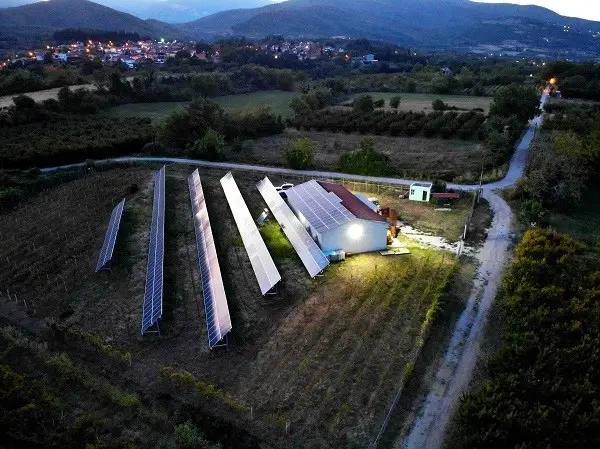
The entire design of the bioclimatic winery aims to
optimize the production process. The temperatures
achieved are ideal for wine at every stage of production. So yes,
it has a positive effect on the production process.
-What is the capacity of the winery in terms of bottling and
which varieties does the wine come from – is the production available on the
domestic market or do you also export abroad?
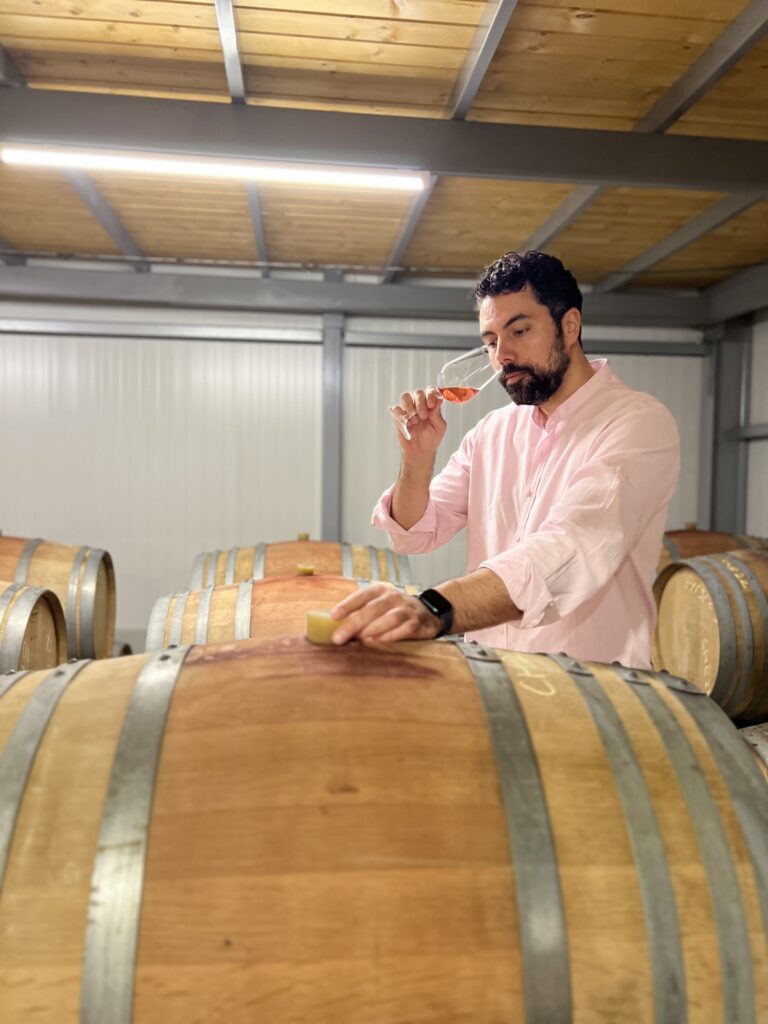
We are a boutique winery from Veroia, specializing in and passionate about
the local Xinomavro grape variety. Our vineyard is located in
Trilofo, in the PDO (Protected Designation of Origin) region of Naoussa,
an area that produces wines with a strong character.
Our goal is to enhance the expression of the diversity of our
terroir (local area) and explore the potential of the powerful
Xinomavro variety, while respecting the environment and the
people who produce and consume it.
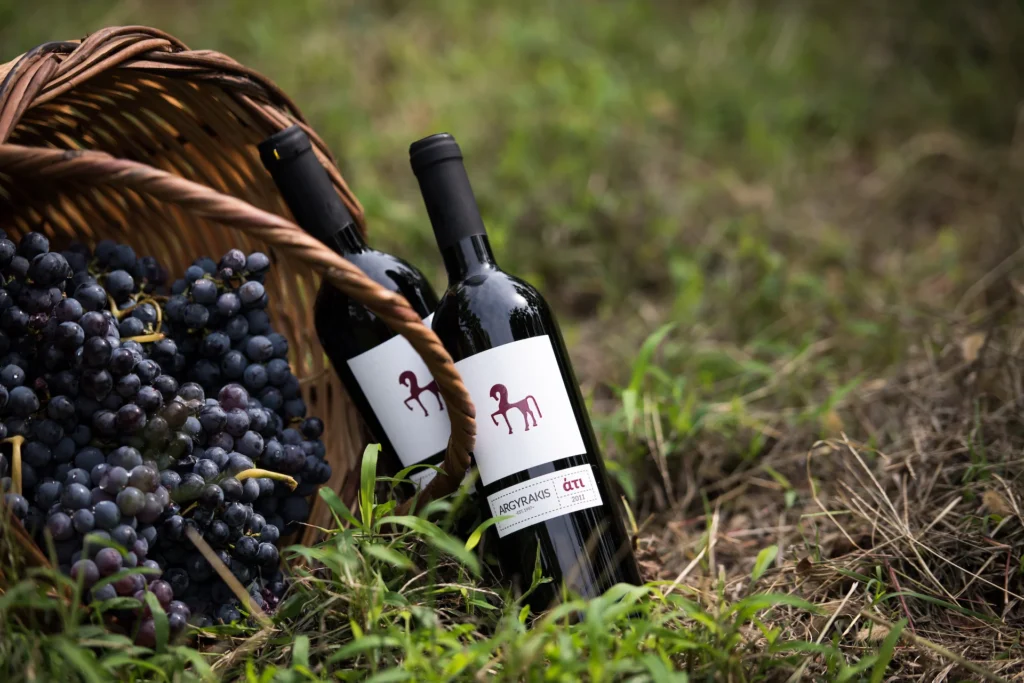
Our collection includes a total of 5 labels. The "Atti" series consists
of 3 unique Xinomavro blends, helping the public to get to know the
characteristics of this variety. The "Chronos" series is produced from 100%
Xinomavro grapes in two versions, white (blanc de noir) and red, and produces
complex, dynamic wines with great aging potential.
Our wines are not just products, but expressions of the character and
tradition of our region. Our total production capacity is 25,000
bottles per year. Alongside our presence in the domestic market,
we continue to export approximately 40% of our production, mainly to Europe
and the USA, with the aim of sharing the culture and taste of Xinomavro
beyond our borders.
-How much has the climate crisis affected your production?
We can see that the weather has changed; this summer was a challenge.
The unpredictable nature of the weather has made it difficult to control
conditions in the vineyard, resulting in the emergence of diseases. In
Xinomavro, we were fortunate not to be affected too much, we had a small
reduction in quantity, of around 15%, which we believe will have a
positive effect on the quality of the wine. Climate change is something that
will undoubtedly affect our work in the vineyard and our
daily lives. Reducing our energy footprint is no longer
a luxury, it is an obligation.
-You are a civil engineer and also a member of the Board of Directors of the Northern Greece Winegrowers' Cooperative
and the Naoussa Winegrowers' Cooperative.
Do your colleagues share the application of RES for their businesses?
Has there been any progress?
ENOAVE consists of 35 wineries in
northern Greece, while the Naoussa Association consists of 25 wineries in
the Naoussa region. Both ENOAVE (Association of Northern Greek Winemakers
and the Naoussa Association, there is a strong desire for
development and awareness of environmental issues. I am very
happy to be involved in both of these collective bodies, because
they are distinguished by their spirit of cooperation and appetite for development.
As far as renewable energy sources are concerned, the truth is that over the last three years, more and more wineries have been using them.
This is largely due to the programs of the Ministry of Agriculture, which
subsidize the installation of RES in wineries with the aim of
achieving energy autonomy. I am confident that in the next five years, most
wineries will base their operations on RES installations, a fact
that makes me very optimistic about the future and the contribution of our industry
to climate change.